Mangaiti Equine Books
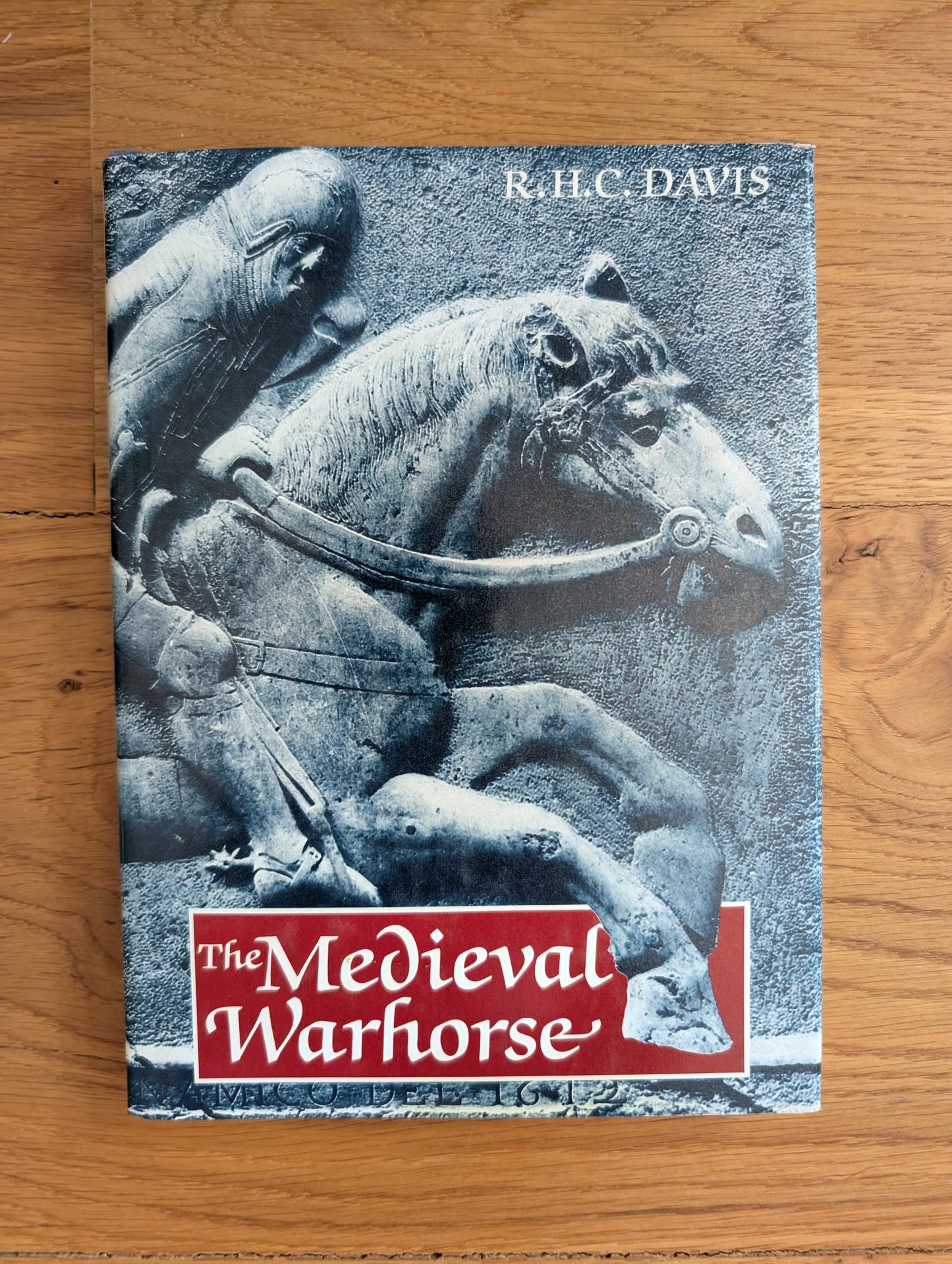
The Medieval Warhorse
The Medieval Warhorse
Couldn't load pickup availability
The medieval knight's single most valuable weapon was his horse. Bred specially for warfare, it was expensive to rear, hard to replace, and literally vital to his victory, often to his life. The very word 'chivalry' orig-inally meant horsemanship. Yet while historians have long studied the knight's armour, they have paid little attention to his horse.
What was the medieval warhorse? Did it come into existence through natural evolution, or was it deliber-ately created? The indigenous horse of North-West Europe, where mounted knights are to be found earlier and in greater numbers than in any other part of the medieval world, was no larger than a Shetland pony. Yet by the eleventh century someone had discovered how to produce large numbers of horses that were bigger and stronger than any seen before. How was this achieved?
Professor Davis's book provides an answer to this question. Starting with a sketch of the development of cavalry warfare in the early Middle Ages, he goes on to consider by which methods selective breeding could be attempted in a pre-scientific age, and how those methods were applied to the warhorse in Europe generally and particularly in England. He examines the crucial intro-duction of Arab and Barb horses, and the international trade from specialist areas - Spain, Southern Italy, Lom-bardy. He explains how difficult it was to build up a breed, and how quickly it could be lost, through disturb-ances or a change in policy. Finally he shows how and why breeders abandoned the idea of producing 'great' horses and developed a new type which became known as the English Thoroughbred.
This pioneering study will enrich the way we see medieval warfare and society, and indeed that most noble and adaptable of animals, the horse.
With 50 illustrations
Hardback, dust cover intact, excellent condition.